Safeguarding

Safeguarding

Bishop Mackenzie International School recognises that child protection and welfare considerations permeate all aspects of school life and must be reflected in all school policies, practices, and activities.

What Is Safeguarding?

Child protection expectations made visible and actionable.

Safeguarding at BMIS

Safeguarding is the action taken to promote the welfare of children and protect them from harm.

This is an extension of child protection and this includes online safety, protection from sexual harassment and a hostile environment, and attending to the physical safety of children while on school grounds. It can also include health and safety policies such as health, wellness, mental health, and well-being policies, as well as visitor policies and hiring practices for teaching and school staff.

Child Protection concerns include suspected, alleged, self-disclosed, or witnessed abuse of a child by anyone associated within or outside the school which must be investigated and followed by appropriate action.

Annual staff safeguarding and child protection training
Training for volunteers, helpers, and outside providers
Immediate reporting and response expectations
BMIS Child Safeguarding Commitment

Core safeguarding principles at BMIS

At BMIS we prioritise the safety and well-being of your children. Working together at home and at school, we will ensure that your children are safe and knowledgeable about their rights and responsibilities to themselves and each other so they can grow and learn free of fear in a safe and supportive environment. This is ongoing work that we are committed to as a team - ensuring that your children are safe, supported, and empowered.

We follow the principles of the United Nations Convention on the Rights of the Child:

  • All children have equal rights to be protected from harm and abuse.

  • Everyone has a responsibility to support the protection of children.

  • All schools have a responsibility to build a community that values diversity, equity, and inclusion for each child.

  • All schools have a duty of care to children enrolled in the school and those who are affected by the operations of the school.

  • All actions on child protection are taken with the best interests of the child, which are paramount.

Our staff undergo annual training in Safeguarding Child Protection, and we also provide training to volunteers/helpers and outside providers that we work with.

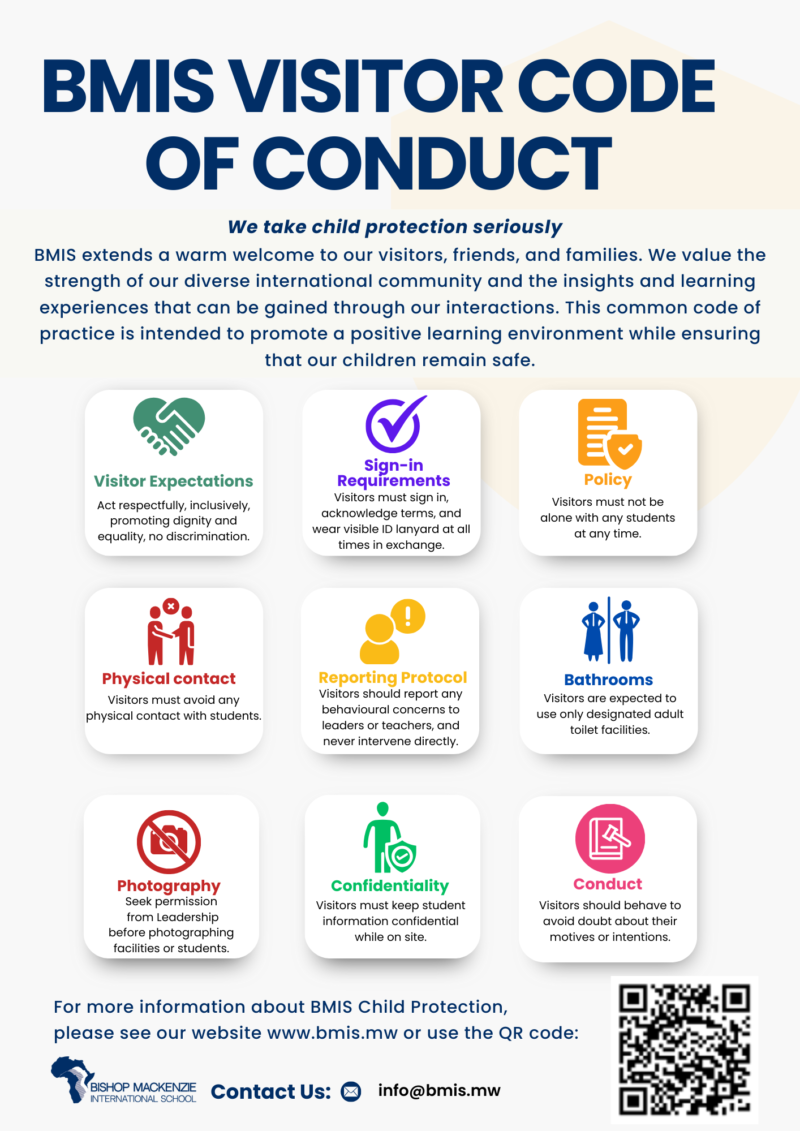
Visitors

Safeguarding Expectations for Visitors and Helpers

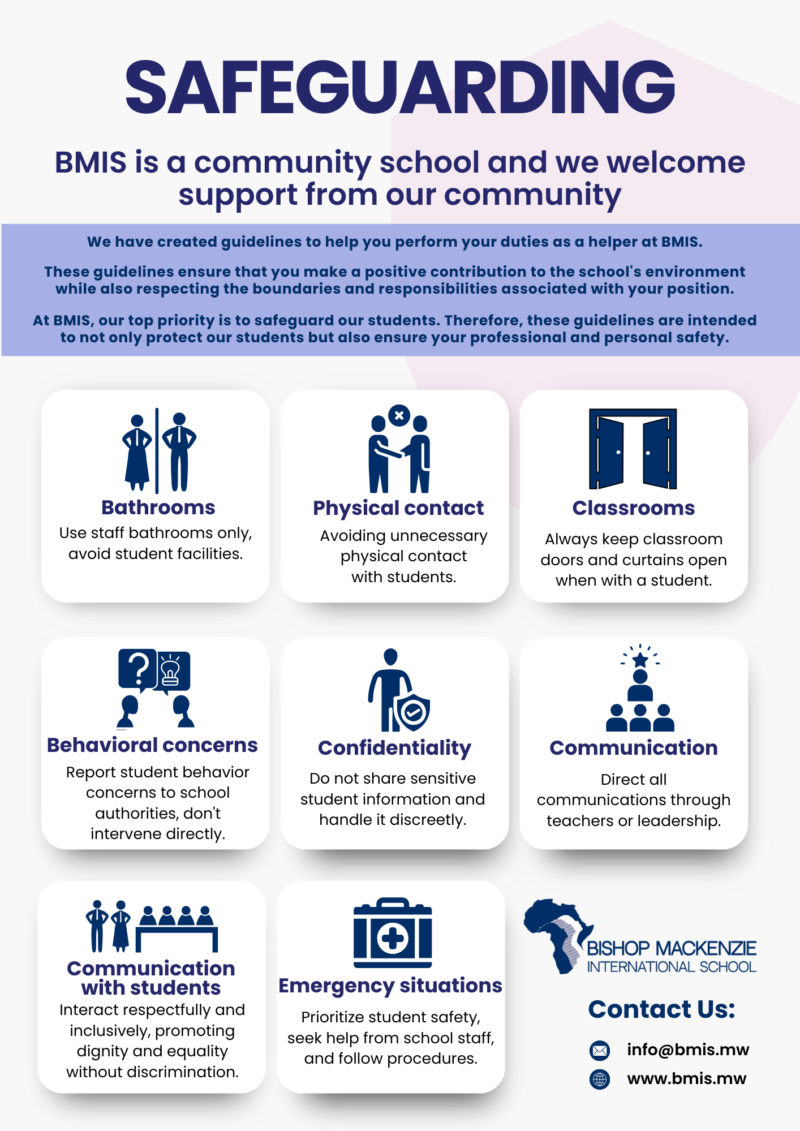
Safeguarding: A Guide for BMIS Helpers

BMIS is a community school that welcomes support from its community. All individuals acting as helpers, whether on a short-term or long-term basis, must be approved by either the secondary or primary principal, or the director. In some cases, approval may depend on the submission of required documentation or other supporting information.

These safeguarding guidelines are designed to help you navigate your role as a helper at BMIS, ensuring that you contribute positively to the school environment while respecting the boundaries and responsibilities associated with your position. BMIS is committed to the safeguarding of its students, and these guidelines are intended to protect both the students and your professional and personal safety.

Helpers must use designated staff bathrooms only and should not enter student bathrooms or changing rooms. Physical contact with students should be avoided; always maintain professionalism and respect boundaries by refraining from hugging, patting, or any unnecessary physical interaction beyond what is essential for the task at hand. Helpers should never be alone with a student in a classroom; ensure that classroom doors and curtains remain open at all times. If any behavioural concerns or issues are observed in students, helpers should report these to teachers or school leaders rather than attempting to address them directly. Additionally, confidentiality must be strictly maintained—sensitive student information should not be discussed with other volunteers or anyone outside of school staff, and all such information must be treated with the utmost discretion.

Communication with parents, guardians, and stakeholders should not be handled independently; all concerns or information must be directed through teachers or school leadership. When interacting with students, always communicate in a caring, supportive, and respectful manner that fosters an inclusive and positive learning environment. Never humiliate, belittle, harass, or make negative comments about students based on their gender, race, disability, sexuality, class, age, health status, personality, or any other protected characteristics, and ensure that all interactions promote dignity, equality, and a sense of belonging within the school community. In emergency situations, your primary responsibility is the safety and well-being of students; do not take on roles beyond your capacity, but instead seek immediate assistance from qualified school staff, follow established emergency procedures, and prioritise safety at all times. Please complete the form below to acknowledge that you have read and agree to the guidelines above.

Resources

Safeguarding documents

Download safeguarding handbooks and related documents uploaded in the Resources module.

Document Type Action
Safeguarding Child Protection PDF View
Learn More About Safeguarding

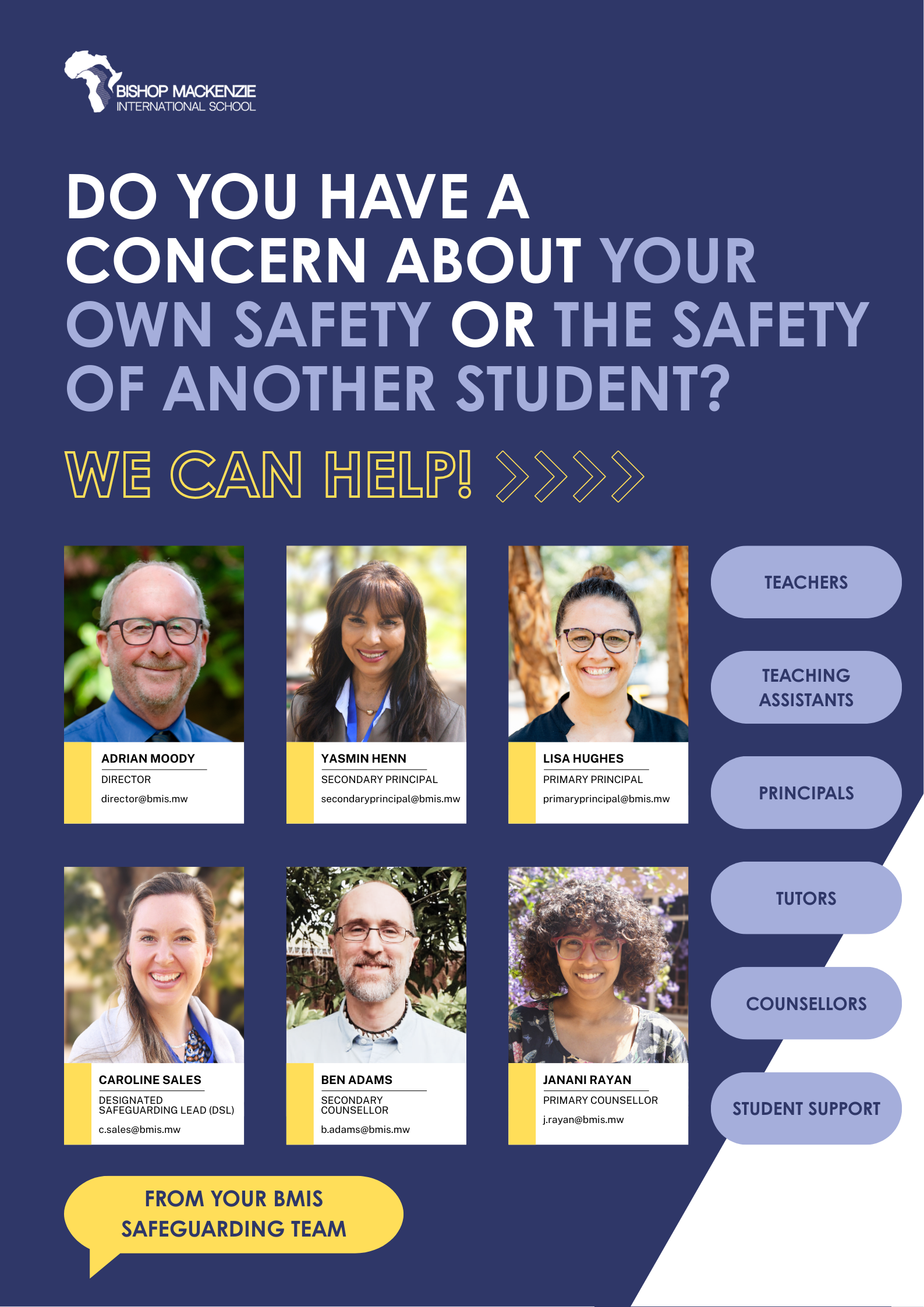
Need guidance or need to raise a concern?

For more information about child safeguarding at BMIS, contact the Designated Safeguarding Lead (DSL), Caroline Sales at safeguarding@bmis.mw, or reach the school directly.